
Siding Contractor in Alpharetta, GA Built for Georgia Heat, Storms & HOAs
Alpharetta gets about 50 inches of rain a year, summer dew points in the 70s, spring hail and a dense tree canopy. That's hard on any exterior. On a lot of 1980s and '90s homes here, the hardboard siding and wood trim look fine from the street while the sheathing behind them quietly rots. Alpharetta Siding & Exterior Specialists replaces and repairs siding with that climate in mind. We install moisture barriers, flash every window, door and roofline correctly, and replace rotted wood trim before any new siding goes on. That way your new exterior protects the house instead of just covering up the damage.
We work on fiber cement, James Hardie, vinyl and engineered wood siding, and we repair storm-damaged panels, soffits and fascia across north metro Atlanta. Our crews work every week in Johns Creek swim-and-tennis communities, on Milton estate properties around Crabapple, and on Roswell homes near Horseshoe Bend and Martin's Landing. We also serve Duluth and Suwanee. We'll go over color and texture options with you before you submit to your HOA's architectural review committee, so you're not stuck waiting on a rejected application.
- ✓Bonded
- ✓Fully insured
- ✓Financing available
- ✓Written estimates with a clear start date
- ✓Rotted trim replaced before new siding goes on
- ✓Daily jobsite cleanup
- ✓Serving a 20-mile radius around Alpharetta
Request Your Free Estimate
No obligation. Fast, honest quotes.
Thank you — your request was sent!
A member of the Alpharetta Siding & Exterior Specialists team will reach out shortly. Need help now? Call (770) 404-9311.
Why Alpharetta Homes Need a Siding Contractor Who Knows North Fulton
Siding in Alpharetta deals with more than weather. Long humid summers, red clay soil, heavy shade and spring hail all wear on it, and so do builder-grade materials from the 1980s–2000s boom and HOA rules that dictate what you can install. A good re-siding job here has to account for all of it.
Humidity, Rain, Hail and Freeze-Thaw: The North Metro Climate
Alpharetta has a humid subtropical climate. Summer highs sit in the upper 80s to low 90s°F and dew points often run in the upper 60s to 70s, so wall cavities and the backs of siding can stay damp for weeks. The area also gets more than 50 inches of rain a year, which keeps lap joints, window trim and the bottom courses near grade wet. Winters bring many freeze-thaw nights in the 20s and 30s, and water trapped in failed caulk or cracked fiber cement edges expands when it freezes. Spring hail hits the north metro several times a decade, denting aluminum and cracking vinyl. Ice storms like the ones in 2011 and January 2014 brought down limbs from the hardwood and pine canopy onto walls and gutters. On top of that, strong UV fades dark vinyl and paint, and poorly draining Piedmont clay splashes up and stains the lower courses.
A Housing Stock From the 1980s–2000s Boom
Most of Alpharetta, Roswell, Johns Creek and Milton went up between the late 1970s and the 2000s. Many of those homes are two-story traditionals or colonials with a brick or stone front and siding on the sides and back. A lot of them were built with Masonite-type hardboard or LP-type OSB siding, and those products have since swollen, delaminated or rotted. Some were covered by class-action settlements. Upscale homes from the late '80s and '90s in Alpharetta, Johns Creek and Dunwoody often have synthetic stucco (EIFS) with hidden moisture problems. Once a house is 25–40 years old, you'll typically see rotted fascia and sills, bottom courses set too close to grade, missing kickout flashing and failed caulk. Inside I-285, the 1950s–60s ranches in Chamblee, Doraville and Brookhaven still have original wood or asbestos-cement shingle siding.
Permits, Building Codes, Historic Review and HOA Approval
Alpharetta's Community Development Department requires a building permit to replace exterior wall covering, and so do Milton, Roswell, Johns Creek, Sandy Springs and Dunwoody, especially when sheathing is replaced. Requirements vary by city, so we confirm them with each jurisdiction. Georgia's version of the International Residential Code requires a water-resistive barrier, flashing at openings and clearance from grade. Following the manufacturer's installation rules, such as James Hardie's gap and clearance specs, is also what keeps the product warranty valid. Homes built before 1978 fall under the EPA's lead-safe (RRP) rules. Roswell's Historic District and downtown Norcross have design review that can restrict a switch from wood to vinyl. Communities like Country Club of the South, Windward, St. Ives and White Columns require architectural committee approval, and some don't allow vinyl at all.
A Market That Expects Premium, Low-Maintenance Exteriors
Homes in Alpharetta, Milton and Johns Creek typically sell for anywhere from the mid-$500Ks to well over $1M. Owners here tend to research carefully, collect several quotes and pick long-life materials over the cheapest bid. They often want James Hardie ColorPlus, LP SmartSide, cedar accents and painted board-and-batten, along with careful trim work and as little damage to the landscaping as possible. Corporate relocations along the GA-400 Technology Corridor mean houses change hands often, and pre-listing exterior refreshes are a big part of that. Empty-nesters in 1990s homes are now doing full re-siding, and young families are giving older ranches a modern farmhouse look.
Common Siding Problems We Find on Alpharetta-Area Homes
Most of the siding failures we see trace back to three things: moisture, the materials the original builder used, and the way the siding was installed in the first place. Here are the problems we find most often in north Fulton, south Forsyth and the Perimeter suburbs, why they happen here, and the signs to look for.
Swollen or Rotting Hardboard and OSB Siding Serious
Masonite-type hardboard and LP-type OSB lap siding were made from wood fibers held together with resin. Once water gets past the paint, especially at cut ends and nail holes, the boards soak it up, swell, soften and come apart, and the wet sheathing behind them starts to rot.
Why it's common hereThousands of homes in Alpharetta, Roswell and Johns Creek built between the mid-1980s and late 1990s went up with these products because they were cheap. Fifty-plus inches of rain a year and long humid summers keep the boards damp, and freeze-thaw nights open up cracks in the paint and let in more water. Red clay splash keeps the bottom courses wet. Shade from mature trees means north-facing walls never fully dry. After 25–35 years, many of these boards are past the point of patching.
Signs you'll notice- Boards swollen or puffy at the bottom edges
- Paint that's flaking or bubbling along the lap joints
- Soft spots that give when you press on them
- Mushrooms or fungus at the bottom courses
- Waffle-pattern texture showing through the paint
- Nail heads sunk into softened board
We see this a lot in late-1980s and 1990s subdivisions off Old Milton Parkway, Windward Parkway and Holcomb Bridge Road, and in Martin's Landing and the older parts of Johns Creek. It's usually worst on rear walls behind decks and on shaded north sides.
Our fix: We do a full tear-off, replace any rotted sheathing, put up a new water-resistive barrier and install fiber cement or engineered wood with the proper ground clearance.
Water Intrusion From Missing Kickout Flashing Serious
A kickout flashing is a small angled piece at the bottom of a roof-wall intersection. It sends roof runoff into the gutter instead of down the wall. When it's missing, water runs behind the siding every time it rains and soaks the sheathing and framing.
Why it's common hereA lot of builders during the 1980s–2000s boom left kickout flashing off, especially where garage roofs and porch roofs meet two-story walls. Alpharetta's frequent summer downpours can put a lot of water on that one spot, and summer humidity keeps the cavity from drying out between storms. The damage stays hidden behind the siding for years. It often doesn't show up until a buyer's home inspector pokes the wall or we pull a board.
Signs you'll notice- Stains or streaks running down from a roofline
- Soft or rotted siding below a roof-wall corner
- Interior drywall stains near that wall
- Peeling paint on trim right below the roofline
- Musty smell in the adjacent room
- Carpenter ant or termite activity at that spot
This is very common on two-story colonials in Windward, White Columns and Country Club of the South, where front-entry porch roofs and side garage roofs run into tall siding walls. Brick-front homes often have it on the side elevations.
Our fix: We open the wall, repair rotted sheathing and framing, install step and kickout flashing that's properly integrated with the WRB, and reinstall or replace the siding.
Hail, Wind and Fallen-Limb Storm Damage Emergency
Storm damage includes cracked or punctured vinyl, dented aluminum, chipped fiber cement and panels that straight-line winds tore loose. Branches knocked down by ice or wind can also break siding, fascia and soffit. Once a wall is open, rain can get into it.
Why it's common hereThe north metro gets damaging spring hail several times a decade. Severe summer thunderstorms bring straight-line winds that can peel off vinyl that was nailed too tight or too sparsely. Lots in Milton, Roswell and Johns Creek tend to be heavily wooded, so ice storms like the ones in 2011 and 2014 drop big limbs right onto houses. After a major storm, out-of-town storm chasers flood the area. Their quick patches often don't match the existing siding and can lead to insurance disputes.
Signs you'll notice- Cracked, holed or missing vinyl panels
- Pockmarks or dents on aluminum siding or gutters
- Panels flapping or unlocked after high winds
- Chipped or cracked fiber cement edges
- Broken soffit or hanging fascia after a limb strike
- Hail dings on window wraps and downspouts
After spring hail, west- and north-facing walls in Alpharetta, Cumming and Suwanee take the most damage. Fallen limbs are the main problem in Milton's wooded estate areas and in Horseshoe Bend in Roswell.
Our fix: We do same-week temporary protection, document the damage for your claim, and match the existing profile and color or recommend replacing the full wall if a match isn't possible.
Rotted Fascia, Soffit, Window Sills and Exterior Trim Moderate
The original builder's wood trim, including fascia boards, rake boards, window and door casings, and corner boards, absorbs water through cut ends and failed paint. It rots, lets water into the wall, and gives carpenter bees and squirrels a way in.
Why it's common hereMid-grade finger-jointed pine trim was standard on the subdivision homes built here from the 1980s to the 2000s. Overflowing gutters full of oak and pine debris keep fascia wet, and caulk joints break down quickly in Georgia heat and UV. Carpenter bees go straight for weathered wood, and subterranean termites are common across the state. After 20-plus years, even homes with sound siding usually have rotted trim.
Signs you'll notice- Soft, crumbling wood at board ends
- Paint peeling down to bare wood
- Gaps between trim and siding
- Carpenter bee holes or sawdust below
- Sagging gutters pulling away from fascia
- Daylight or animal activity at soffit gaps
It shows up on nearly every 1990s home we inspect in Alpharetta and Roswell, especially on window sills facing south or west and on fascia under the big oaks in Crabapple and Mountain Park.
Our fix: We replace rotted trim with PVC, composite or primed fiber cement trim, back-prime and seal joints, and install vented aluminum or fiber cement soffit.
Failed Caulk and Fading Paint on Fiber Cement Moderate
Fiber cement lasts a long time, but it depends on paint and sealed butt joints. Once the caulk shrinks and cracks and the paint chalks, water gets into the cut edges. Those edges can then wick moisture, crack or flake during freeze-thaw cycles.
Why it's common hereMost homes built here since the early 2000s have field-painted fiber cement. Strong summer UV, heat in the 90s and freeze-thaw winters break down caulk in just a few years, and painted fiber cement typically needs repainting every 7–15 years. Some early installs were also done without the manufacturer's required gaps or ground clearance, so the bottom edges are sitting in red clay splash.
Signs you'll notice- Cracked or separated caulk at butt joints
- Chalky residue when you rub the paint
- Faded or blotchy color on sunny walls
- Cracked or flaking board edges
- Bottom course touching mulch or soil
- Visible gaps at window trim
We see this on 2000s–2010s builds in Milton, south Forsyth, Suwanee and Sugar Hill. South- and west-facing walls fade first, and homes near Halcyon and newer townhome rows often have tight ground clearances.
Our fix: For sound boards, we recaulk, spot-replace damaged pieces and repaint. For bad installs, we re-side with correct clearances or use pre-finished ColorPlus to reduce future painting.
Mildew, Algae and Red Clay Staining Minor
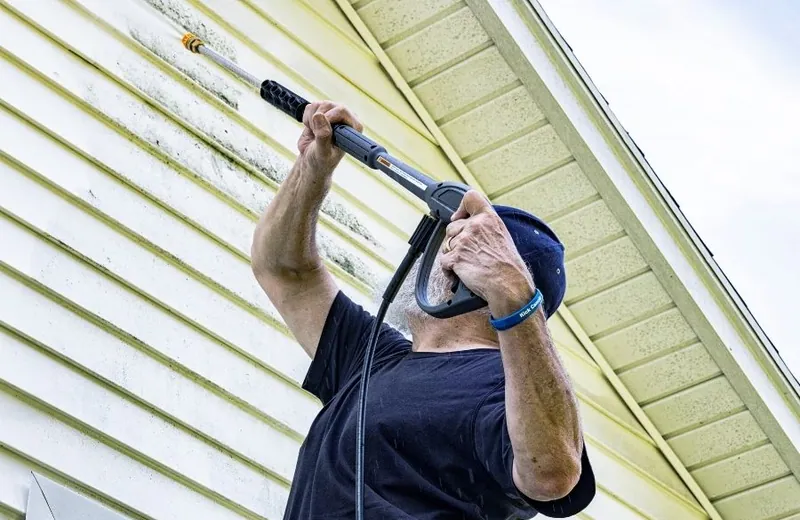
Green and black mildew, algae and moss grow on shaded, damp walls, and rain splashes red Piedmont clay onto the lower courses. A lot of this is cosmetic, but it holds moisture against the siding and can hide early rot.
Why it's common hereNorth Fulton's mature hardwoods and pines throw heavy shade, and with dew points near 70 for much of the summer, north-facing walls barely dry out. Clay soil drains poorly and splashes up during the area's frequent thunderstorms. When siding sits too close to grade, the stain sets into vinyl texture and porous paint, and the lower boards stay wet.
Signs you'll notice- Green or black film on north walls
- Orange-red staining on bottom courses
- Moss on siding near shrubs or downspouts
- Discoloration that comes back after washing
- Damp-feeling boards near beds and mulch
It's especially common on wooded lots in Milton, Mountain Park and Berkeley Lake, and on homes backing up to creeks and greenbelts in Johns Creek and Roswell.
Our fix: We treat or clean the siding, check the boards behind the stains for damage, correct grade clearance, and recommend mildew-resistant, pre-finished siding when re-siding.
Siding Services for Alpharetta and North Metro Atlanta
Whatever material your house has, and whatever your HOA or historic commission will allow, we install it with the same basics: a continuous water-resistive barrier, properly integrated flashing, the manufacturer's gaps and clearances, and new trim wherever the old wood has rotted. Here's what we offer and when each option makes sense.
James Hardie Siding Installation ⭐ Specialty
We install James Hardie lap, panel, shingle and board-and-batten products, including pre-finished ColorPlus, on full re-sides, additions and EIFS replacements across north Fulton.
Our approachWe follow Hardie's written installation instructions: required clearances above grade and roofline, gapped butt joints with joint flashing, blind nailing, and kickout flashing at every roof-wall intersection. Following those rules is what keeps your product warranty valid.
In Alpharetta, GAHardie is the default upgrade in communities like Windward, White Columns and Country Club of the South. Many of them require fiber cement or masonry, and it stands up to Alpharetta's humidity, termites and hail far better than the hardboard it usually replaces.
Best for: Homeowners in HOA neighborhoods, owners of 1980s–90s hardboard homes, and anyone who wants a long-life, low-maintenance exterior that helps resale value.
Siding Replacement Services ⭐ Specialty
We do full tear-off re-siding. We strip the old siding down to the sheathing, repair rot and install a complete new exterior system with new trim, soffit and flashing.
Our approachWe inspect every exposed wall, replace damaged OSB or plywood, install the WRB, tape and flash the windows, and then install the new cladding. Rot repairs are priced per sheet ahead of time so there are no surprises.
In Alpharetta, GAThis is how we handle failing Masonite and LP siding on Alpharetta, Roswell and Johns Creek homes from the 1980s–90s, where hidden sheathing rot behind the bottom courses and roof-wall corners is common.
Best for: Homes 25–40 years old with swollen, delaminating or repeatedly patched siding, plus pre-listing refreshes for relocating families.
Siding Installation
We install new siding on additions, new construction, garages and outbuildings, and we tie it neatly into the existing exterior.
Our approachWe start with correct WRB and flashing, then pick a profile and exposure that match the existing house and the code requirements for that city.
In Alpharetta, GAWe often add siding to basement finishes, sunrooms and garage additions in Milton and Johns Creek, where the new work has to match an HOA-approved exterior exactly.
Best for: Additions, detached garages, accessory buildings and new builds.
Vinyl Siding Installation
We install insulated and standard vinyl siding in a range of profiles and colors, with matching vinyl or aluminum trim components.
Our approachWe hang the panels loosely so they can expand in summer heat, nail them at correct spacing to hold up in high winds, use heat-resistant colors, and install a proper housewrap underneath.
In Alpharetta, GAVinyl is a practical choice in Duluth, Norcross, Doraville and Woodstock where HOAs allow it. We'll steer you away from dark colors near low-E windows that can warp vinyl in Georgia sun.
Best for: Budget-conscious re-sides, rental properties and neighborhoods without vinyl restrictions.
Fiber Cement Siding Installation
We install fiber cement lap, panel and shingle siding from James Hardie and comparable manufacturers, either primed for paint or pre-finished.
Our approachWe back-prime cut edges, gap and flash butt joints, keep the required clearances from grade, roofs and decks, and cut with dust-controlled tools.
In Alpharetta, GAFiber cement holds up to humidity, termites and freeze-thaw cycles, so it's the most common replacement for hardboard and EIFS on Alpharetta-area homes.
Best for: Homeowners who want durability, fire resistance and a painted-wood look without the rot.
Hardie Plank Siding Installation
We install HardiePlank lap siding in smooth, cedarmill and beaded textures and in a range of exposures to match existing houses or create a new look.
Our approachWe keep reveals consistent, align the courses with window heads and sills, and use clean corner and trim details.
In Alpharetta, GAIt's the go-to profile for re-siding the sides and backs of brick-front colonials in Alpharetta and Roswell, including the transitions where new siding meets existing masonry.
Best for: Traditional and colonial homes that need a classic lap look.
Hardie Board Installation
We install Hardie panels, trim boards and accent pieces, including HardieTrim, for gables, bump-outs, porch ceilings and modern panel facades.
Our approachWe lay out the panel grid and joint flashing before we cut, then use concealed or batten-covered seams depending on the design.
In Alpharetta, GAWe use it on modern townhome-style facades and gable accents similar to what's going up around Avalon and the Old Milton Parkway corridor.
Best for: Accent areas, gables, and contemporary panel designs.
Board and Batten Siding Installation
We install vertical board-and-batten siding in fiber cement, engineered wood or real wood, whether for a whole house or as an accent.
Our approachWe use furring or rainscreen strips where appropriate, space the battens evenly, flash horizontal transitions, and paint or pre-finish to your HOA-approved color.
In Alpharetta, GAModern farmhouse re-sides with painted board-and-batten are among the most requested projects in Milton, Crabapple and south Forsyth near Halcyon.
Best for: Modern farmhouse and craftsman updates.
Board and Batten Exterior Installation
We handle complete board-and-batten exterior makeovers, coordinating the siding, trim, gables and porch details into a single design.
Our approachWe do design layouts first and mock up batten spacing and trim widths, then install over a full WRB with all transitions flashed.
In Alpharetta, GAIt's popular with young families updating 1970s–80s ranches and split-levels in Roswell, Sandy Springs and Brookhaven into modern farmhouse homes.
Best for: Whole-house style transformations.
Vertical Siding Installation
We install vertical panel, reverse board-and-batten and modern vertical profiles in fiber cement, engineered wood or metal.
Our approachWe use horizontal nailing blocking or furring, Z-flashing at horizontal breaks, and well-detailed corners so water can't sit at the seams.
In Alpharetta, GAVertical siding works well on second-story gables and on mixed-material facades in newer Alpharetta, Johns Creek and Cumming builds.
Best for: Contemporary accents and mixed-material designs.
Engineered Wood Siding Installation
We install engineered wood lap, panel and trim systems such as LP SmartSide, which gives the look of real wood with better impact resistance.
Our approachWe seal all field cuts, keep the required clearances and gaps, and use the manufacturer-specified fasteners.
In Alpharetta, GAIt's a lighter, impact-resistant option for homes in hail-prone areas and on wooded lots in Milton and Woodstock where falling limbs are a risk.
Best for: Homeowners who want a wood look with strong impact resistance.
Wood Siding Installation
We install and replace real wood lap, clapboard and drop siding, including matching historic profiles.
Our approachWe back-prime and end-seal every board and use stainless or hot-dipped fasteners. A rainscreen gap is recommended so the boards can dry.
In Alpharetta, GAWood is required or preferred under historic design review in Historic Roswell and downtown Norcross, where changing from wood to vinyl may be restricted.
Best for: Historic homes and authentic restorations.
Cedar Siding Installation
We install cedar lap and bevel siding and cedar accents, finished in stain or paint.
Our approachWe use kiln-dried, back-primed cedar, stainless fasteners, a rainscreen and factory or field finishing to resist mildew.
In Alpharetta, GACedar is often used on custom homes and as accents on estate properties in Milton and Crabapple. Because of heavy shade and humidity, it needs a rainscreen and a good finish.
Best for: Custom and high-end homes that want natural wood character.
Cedar Shake Siding Installation
We install cedar shake and shingle siding, or low-maintenance fiber cement shake alternatives, on gables and full walls.
Our approachWe keep exposures consistent, double the starter course, and lay staggered joints over a breathable underlayment.
In Alpharetta, GAShake gables are a signature detail on many craftsman-style homes in Alpharetta and Johns Creek, and we can replace failing originals in matching materials.
Best for: Craftsman and cottage-style homes.
Metal Siding Installation
We install steel and standing-seam metal siding for modern residential accents and outbuildings.
Our approachWe use concealed-fastener panels with sealed trims, and we separate dissimilar metals to prevent corrosion.
In Alpharetta, GAMetal siding fits modern infill builds in Brookhaven and Chamblee, and barns and equestrian structures on Milton properties.
Best for: Modern designs, barns and workshops.
Aluminum Siding Installation
We repair and replace aluminum siding, and we also replace hail-dented aluminum with modern materials.
Our approachWe source matching profiles where they're still made, or replace a full wall when an exact match isn't available.
In Alpharetta, GAAluminum is still found on mid-century homes in Doraville, Chamblee and Norcross, where spring hail leaves dents.
Best for: Owners of older aluminum-clad homes.
Stone Veneer Siding Installation
We install manufactured and natural stone veneer for wainscots, columns, chimneys and accent walls.
Our approachWe install two layers of WRB, lath, a scratch coat and a weep screed at the base so moisture can drain out instead of getting trapped.
In Alpharetta, GAWe use it to match or extend the stone fronts common on north Fulton homes, and we make clean transitions where siding meets masonry.
Best for: Curb-appeal upgrades and matching existing masonry.
Soffit and Fascia Installation
We replace rotted fascia and damaged soffit, and we add vented soffit to improve attic airflow.
Our approachWe replace rotted wood with PVC, composite or fiber cement, wrap it in aluminum where appropriate, and install vented panels to code.
In Alpharetta, GAGutters clogged with oak and pine debris rot fascia across Alpharetta and Roswell, and squirrels get in through damaged soffits.
Best for: Homes with rotted rooflines or poor attic ventilation.
Exterior Trim Installation
We replace window and door casings, corner boards, frieze boards and sills, which is always done before new siding goes on.
Our approachWe install rot-proof PVC or fiber cement trim with sill pans, head flashing and sealed joints.
In Alpharetta, GARotted window sills and finger-jointed pine trim are the most common repair we find on 1990s homes in Alpharetta, Johns Creek and Suwanee.
Best for: Any home with soft or peeling trim.
Siding Repair Services
We repair storm-damaged, rotted or cracked siding panels, soffits and fascia, matching the existing profile and color as closely as possible.
Our approachWe find and fix the moisture source, replace the damaged boards and sheathing, reflash, and paint or color-match.
In Alpharetta, GAAfter spring hail and summer wind storms in north Fulton, we document the damage for insurance claims and tell you honestly when a match isn't possible.
Best for: Localized damage on otherwise sound siding.
Siding Inspection and Consultation
We do detailed exterior evaluations that cover moisture readings, flashing checks and material recommendations, along with a written scope of work.
Our approachWe probe suspect areas, check clearances and kickout flashing, and photograph the problems we find.
In Alpharetta, GAThese are useful for pre-listing and pre-purchase decisions, given how often homes change hands with corporate relocations along the GA-400 corridor.
Best for: Buyers, sellers and homeowners planning ahead.
Asbestos Siding Removal and Replacement
We replace asbestos-cement shingle siding on mid-century homes, coordinating safe removal and disposal.
Our approachWe work with qualified abatement handling and the required disposal procedures, and we follow lead-safe practices on pre-1978 painted trim.
In Alpharetta, GAThis is common on 1950s–60s ranches in Chamblee, Doraville, Brookhaven and Sandy Springs that are being renovated.
Best for: Pre-1980 homes with original cement shingles.
Mobile Home Siding Replacement
We replace damaged or dated siding on manufactured homes with vinyl or lightweight panels.
Our approachWe use profiles suited to manufactured-home framing and secure the skirting and trim carefully.
In Alpharetta, GAWe repair storm and limb damage on manufactured homes throughout our 20-mile service radius.
Best for: Manufactured and mobile home owners.
Commercial Siding Installation
We install siding on offices, retail, multifamily and townhome buildings in fiber cement, panel and metal systems.
Our approachWe phase the work to keep businesses open, coordinate permits, and manage sites safely.
In Alpharetta, GAWe work on small commercial and townhome projects along the Old Milton Parkway and Windward corridors, and on mixed-use buildings in close-in suburbs.
Best for: Property managers, HOAs and small commercial owners.
Modern Siding Installation
We create contemporary exteriors by combining panel, vertical, board-and-batten, metal and wood-look accents.
Our approachWe start with a design consultation and material samples, and our detailing keeps the clean lines watertight.
In Alpharetta, GAThis matches the modern farmhouse and contemporary styling at Avalon and Halcyon, and it's popular with families updating older homes.
Best for: Homeowners who want a fresh, design-forward exterior.
Our Siding Process, From Inspection to Final Walkthrough
You'll get a written estimate, a clear start date and a clean jobsite every day. Here's what happens at each step, and what we plan for that's specific to Alpharetta-area homes.
Inspection and Consultation
- We walk the whole exterior and probe the bottom courses, sills and roof-wall corners
- We take moisture readings and photograph any problem areas
- We check for kickout flashing and measure clearance from grade and rooflines
- We talk through your goals, budget and timeline
Local note: On 1980s–90s homes we specifically look for hardboard and OSB rot, and on pre-1978 homes we flag lead and asbestos concerns.
Written Estimate and Material Selection
- You get an itemized written scope and price
- Sheathing repair is priced per sheet ahead of time
- We review color, texture and profile samples with you
- We explain financing options if you'd like them
Local note: We help you put together your HOA architectural review packet with manufacturer color names and spec sheets.
Permits, HOA Approval and Scheduling
- We pull the building permit where the city requires one
- We wait on HOA or historic commission approval
- We order materials and confirm a clear start date
- We plan dumpster and material placement
Local note: Permit rules vary between Alpharetta, Milton, Roswell, Johns Creek, Sandy Springs and Dunwoody. We also schedule crews around GA-400 traffic.
Tear-Off, Repairs and Installation
- We protect the landscaping, windows and HVAC units
- We remove the old siding and replace rotted sheathing and trim
- We install the WRB, window flashing and kickout flashing
- We install the new siding, soffit and fascia to the manufacturer's specs
- We clean up the site every day
Local note: We plan around summer thunderstorms so that walls are never left open and unprotected overnight.
Final Inspection and Walkthrough
- We inspect the work ourselves and complete the city inspection where required
- We walk the property with you and finish any punch-list items
- We do a magnetic sweep for nails and haul away debris
- We hand over warranty documents and care guidance
Local note: We'll also suggest maintenance tailored to your lot, such as mildew control on shaded walls and gutter care under heavy tree canopy.
Why Alpharetta Homeowners Choose Us
We Fix the Rot Before We Cover It
The fastest way to ruin a new siding job is to install it over soft sheathing and rotted trim. On 1980s and '90s homes in Alpharetta, Roswell and Johns Creek, we expect to find damage behind the bottom courses, around windows and below roof-wall intersections. That's why we replace rotted wood trim before any new siding goes on, and why sheathing repair is priced per sheet in your estimate ahead of time. You'll know what we found and what it costs, and you won't end up with a pretty exterior hiding a wet wall.
Moisture Management Built for Georgia's Climate
With 50-plus inches of rain a year and summer dew points near 70°F, how a wall drains matters more than what's on its surface. Every project gets a water-resistive barrier, taped and flashed windows and doors, flashing at rooflines and kickout flashing wherever a roof meets a wall. We also follow manufacturer clearance rules so your bottom course isn't sitting in red clay splash-back. The point is a wall that sheds water and dries out the way it's supposed to.
Bonded and Insured
We are bonded and insured, so you're protected if something goes wrong on your property. In an area where storm chasers show up after every major hail event, that matters. We encourage you to ask any contractor, including us, for proof of insurance and bonding, and to check Georgia contractor licensing through the State Licensing Board for Residential and General Contractors before signing. A contractor who's still around next year is the one who can stand behind the work.
HOA and Historic Review Made Easier
North Fulton and south Forsyth are full of architectural review committees, and some communities won't allow vinyl or have strict color palettes. We go over color and texture options with you, provide manufacturer names and spec sheets, and help you put together a complete submission. That's true whether you're in Windward, White Columns, St. Ives or a neighborhood with its own design guidelines. For homes in Historic Roswell or downtown Norcross, we'll talk through material options that design review is likely to approve.
Written Estimates and a Clear Start Date
People in this area compare quotes carefully, and they should. Every estimate we write itemizes the materials, trim, soffit and fascia, flashing, and labor, along with how we'll handle any hidden damage. You'll also get a clear start date so you can plan around work schedules, school runs or a home listing date. Nothing in our estimates is left vague.
Respect for Your Home and Landscaping
Many of our clients live in homes worth $600K to well over $1M, with mature landscaping they've spent years on. We protect beds, shrubs, HVAC units and windows. We clean up every day, run magnetic nail sweeps and haul off debris, so your driveway isn't a construction zone overnight. Brick and stone transitions get careful detailing, because that's where the quality of the work is most obvious.
Every Siding Material, Plus Financing
We install fiber cement, James Hardie, engineered wood, vinyl, cedar, metal, stone veneer and board-and-batten, so you'll get a recommendation based on your home, HOA and budget rather than whatever one product we happen to sell. If you're replacing failing hardboard all at once instead of patching it wall by wall, financing is available to spread out the cost.
A Bonded, Insured Siding Contractor for North Metro Atlanta
Homeowners from Windward to Horseshoe Bend tell us what they valued most: rot was fixed instead of covered up, the estimate didn't change halfway through, and the yard was clean every evening. Ask us for references from projects near you.
Bonded • Insured • Financing available
Siding Service Areas Across North Metro Atlanta
We're based in Alpharetta and serve homeowners within about 20 miles, from the estate lots of Milton to the mid-century ranches inside I-285. Each area has its own housing stock and permit rules, so we plan each project around them.
North Fulton & Cherokee
Gwinnett & South Forsyth
Perimeter & Close-In Suburbs
We serve homes and businesses within roughly a 20-mile radius of Alpharetta. If you're near the edge of that radius, such as in Woodstock, Sugar Hill or inside I-285, call us and we'll confirm availability. Not sure if we cover your area? Call (770) 404-9311.
How Much Does Siding Cost in Alpharetta, GA?
For most Alpharetta-area homes, a full re-side runs from the low teens to $60,000 or more. The range is that wide because of the material you choose, how much siding the house actually has, and how much rot turns up behind the old boards. Here's what affects the price.
Siding Material and Finish Primary Factor
Vinyl typically runs about $5–$9 per square foot installed. Fiber cement and James Hardie usually run $10–$16, and pre-finished ColorPlus costs more up front but saves on future repainting. Engineered wood falls in between. Cedar, natural stone veneer and custom board-and-batten are at the top of the range. Your HOA may narrow the options, since some communities require fiber cement or masonry and don't allow vinyl.
Hidden Rot and Sheathing Repair Primary Factor
On 1980s–90s homes with hardboard or OSB siding, rotted sheathing is common near the bottom courses, windows and roof-wall corners. Replacing a sheet of sheathing typically adds roughly $90–$150 per sheet installed, and framing repairs cost more. We put per-sheet pricing in your written estimate so the cost of hidden damage is known before we start.
Home Size, Height and Complexity Major Factor
Two-story colonials with tall gables, dormers, bump-outs and steep, wooded lots need more staging and labor than a single-story ranch. A brick-front home only needs siding on the sides and back, which lowers the square footage, but the transitions where siding meets masonry take careful detailing. The number of windows matters too, because each one needs flashing and new trim.
Trim, Soffit and Fascia Moderate Factor
Replacing rotted pine trim with PVC or fiber cement, wrapping fascia and adding vented soffit can add $3,000–$12,000 to a full re-side depending on linear footage. On most 25-year-old homes in Alpharetta, at least some trim replacement is needed.
Removal, Permits and Special Handling Variable Factor
Tear-off and disposal are included in most re-sides, but some jobs need more. EIFS removal, asbestos-cement shingles on mid-century homes in Chamblee or Doraville, and lead-safe work on pre-1978 houses all add cost. City permit fees vary by jurisdiction, and the extra time needed for HOA approvals can affect scheduling.
| Typical project | Details | Estimated range |
|---|---|---|
| Storm repair on one elevation | Replace hail- or limb-damaged vinyl or fiber cement on one wall, with flashing check and color match | $800 – $4,500 |
| Vinyl re-side, single-family home | About 1,800–2,200 sq ft of siding, insulated vinyl, new housewrap and trim wraps, Duluth or Norcross area | $13,000 – $24,000 |
| Hardboard-to-James Hardie replacement | Two-story Alpharetta or Johns Creek home with a brick front, about 2,500 sq ft of siding, rot repair, new PVC trim and kickout flashing | $32,000 – $58,000 |
| EIFS removal and fiber cement re-side | 1990s luxury home, full stucco removal, sheathing repair, drainage plane and Hardie lap with board-and-batten accents | $60,000 – $120,000+ |
Financing is available, so you can replace failing siding all at once instead of patching it a wall at a time. Ask us about options when we review your estimate. New siding protects the structure, eliminates recurring rot repairs, and is one of the exterior upgrades buyers notice first. That's worth a lot in a market where homes often sell through corporate relocations.
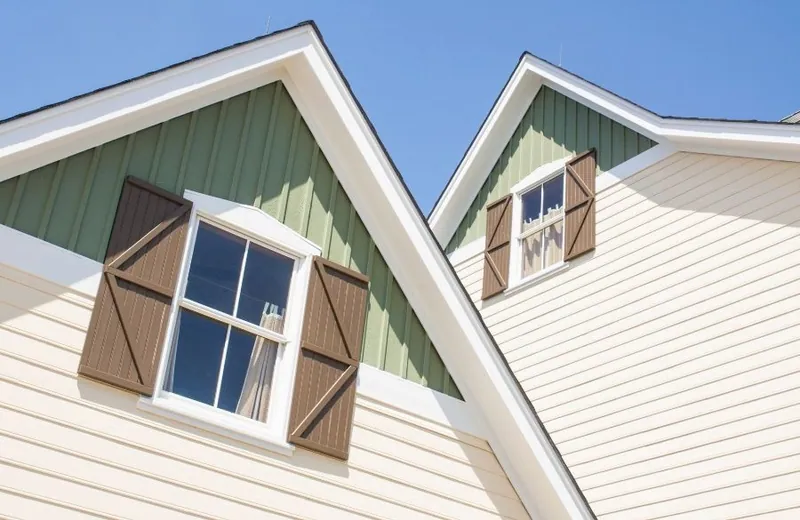
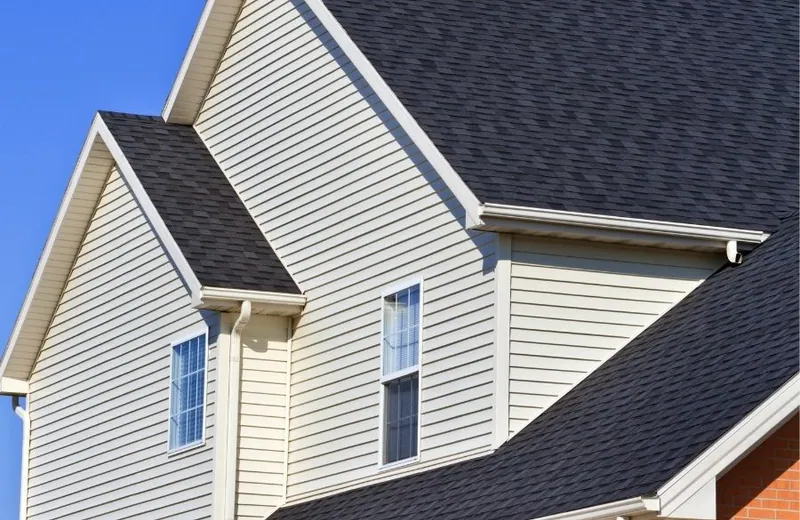
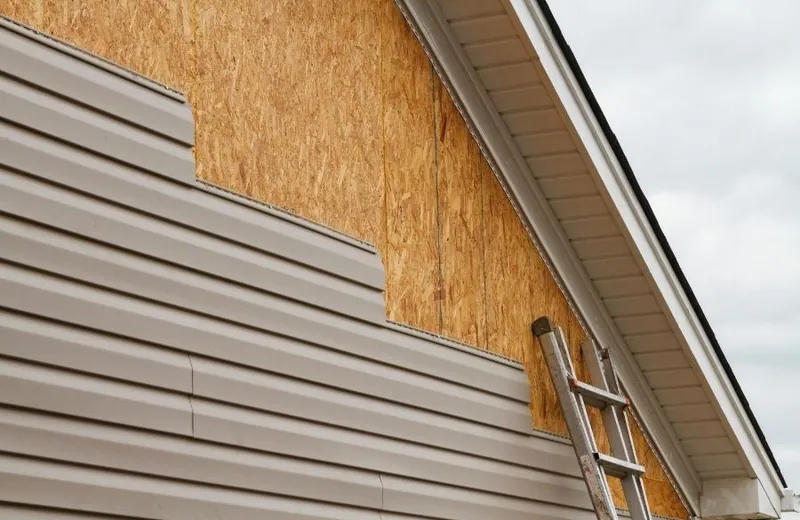
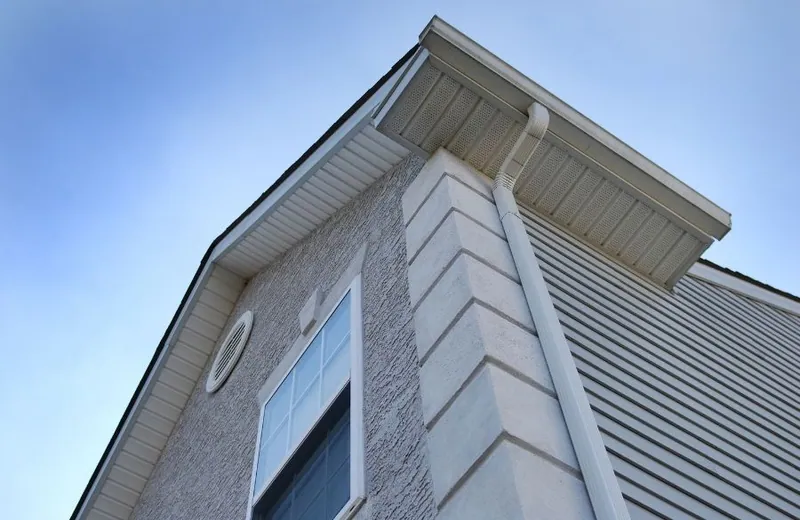
Recent siding Projects in Alpharetta, GA
Siding Questions From Alpharetta Homeowners
How much does it cost to replace siding on a house in Alpharetta?
Most full re-siding projects in Alpharetta fall between about $15,000 and $60,000. Vinyl is at the low end, and James Hardie fiber cement on a large two-story home is at the high end. EIFS removal projects can go well past $60,000. The biggest factors are the material, how much siding the house actually has (brick-front homes need less), and how much rotted sheathing is behind the old boards. Our written estimates include per-sheet pricing for sheathing repair, so you know up front how hidden damage will be handled. Financing is available.
How long does a siding replacement project take?
Installation on a typical Alpharetta home takes about 1–3 weeks. A smaller single-story house may be done in under a week, while a large two-story home with significant rot or EIFS removal can take longer. Before work begins, allow another 1–4 weeks for permits and HOA architectural approval, which vary by city and community. Summer thunderstorms can cause short weather delays, but we never leave a wall open and unprotected overnight. You'll get a clear start date in writing before we begin.
Do I need a permit to replace siding in Alpharetta?
In most cases, yes. Alpharetta's Community Development Department, along with Milton, Roswell, Johns Creek, Sandy Springs and Dunwoody, generally requires a building permit to replace exterior wall covering, especially when sheathing or structure is replaced. Requirements differ from city to city, so we confirm them with each jurisdiction and pull the permit where one is required. Homes in Roswell's Historic District or downtown Norcross may also need design review, and most HOAs in north Fulton require architectural committee approval of material, color and profile.
Will my HOA approve vinyl siding, or do I need fiber cement?
It depends on your community. Many swim-and-tennis and golf communities in Alpharetta, Johns Creek and Milton, such as Country Club of the South, St. Ives, Windward and White Columns, require committee approval for any change to siding material, color or profile. Some prohibit vinyl entirely or require fiber cement or masonry. We'll go over your covenants and color options with you and provide manufacturer spec sheets for your application. If vinyl isn't allowed, engineered wood or fiber cement are usually the options.
Should I choose James Hardie fiber cement or vinyl siding?
For most Alpharetta homes, fiber cement is the better long-term choice. It resists rot, termites, fire and hail, it handles humidity and freeze-thaw cycles well, and it's the material many HOAs and buyers expect. Vinyl costs less up front and never needs painting, but it can crack in hail, warp near reflective low-E windows and tear loose in high winds if it's installed poorly. If you're on a tighter budget or in a neighborhood without restrictions, quality insulated vinyl can still be a good, practical option.
How do I know if my siding needs replacing instead of repairing?
Repair makes sense when the damage is limited to a few boards and the rest of the siding is sound. Replacement is the better call when you see widespread swelling or soft spots, waffle-texture showing through on hardboard, repeated paint failure, rot in several areas, or a profile that's been discontinued and can't be matched. On 1980s–90s Masonite or LP-type siding, patching usually just delays the inevitable. A siding inspection with moisture probing at the bottom courses and roof-wall corners will tell you which situation you're in.
When should I call right away instead of waiting?
Call right away if storm damage has left holes, cracked panels or missing siding, if a fallen limb has broken fascia or soffit, or if you see water stains on interior walls. Open walls let our heavy rain straight into the sheathing, and damage spreads quickly in Georgia humidity. Soft spots, mushrooms near the bottom courses, bubbling paint and carpenter bee activity also mean you shouldn't wait. Small rot repairs can turn into whole-wall sheathing replacement within a season or two.
How can I prevent siding problems on my Alpharetta home?
Keep gutters clear of oak and pine debris so water doesn't overflow onto the fascia and walls. Keep mulch and soil at least several inches below the bottom course, and use the manufacturer's recommended clearance as your guide, to reduce red clay splash and wicking. Wash mildew off shaded north walls every year. Check caulk joints around windows each spring, since heat and UV break caulk down fast. Painted fiber cement typically needs repainting every 7–15 years. Finally, make sure every roof-wall intersection has kickout flashing.
Serving Alpharetta, GA & Nearby
Schedule Your Siding Inspection in Alpharetta
Hidden rot is the problem on most Alpharetta homes, and it's cheaper to deal with now than after another rainy season. Have us inspect your siding, trim and flashing, and get a written plan that fits your home, HOA and budget.
- ✓A thorough exterior inspection with moisture probing and photos
- ✓A written, itemized estimate with sheathing repair priced up front
- ✓HOA-ready color and texture review and spec sheets
- ✓Rotted trim replaced before new siding goes on
- ✓Moisture barriers and proper flashing at windows, doors and rooflines
- ✓A clear start date and daily jobsite cleanup
- ✓Financing available for full re-siding projects
⚡ Storm damage from hail, wind or a fallen limb? Call now. We'll help protect open walls quickly and document the damage for your insurance claim.
Bonded • Insured